The best roofing material for a flat roof depends on climate, building type, and budget. In Miami’s hot, hurricane-prone environment, TPO and modified bitumen are among the most popular flat roofing systems due to their durability, heat resistance, and wind performance under Florida Building Code standards.
Flat roofs behave differently than pitched roofs.
They:

High UV radiation

Intense humidity

Heavy rainfall

Hurricane-force winds

Salt air exposure
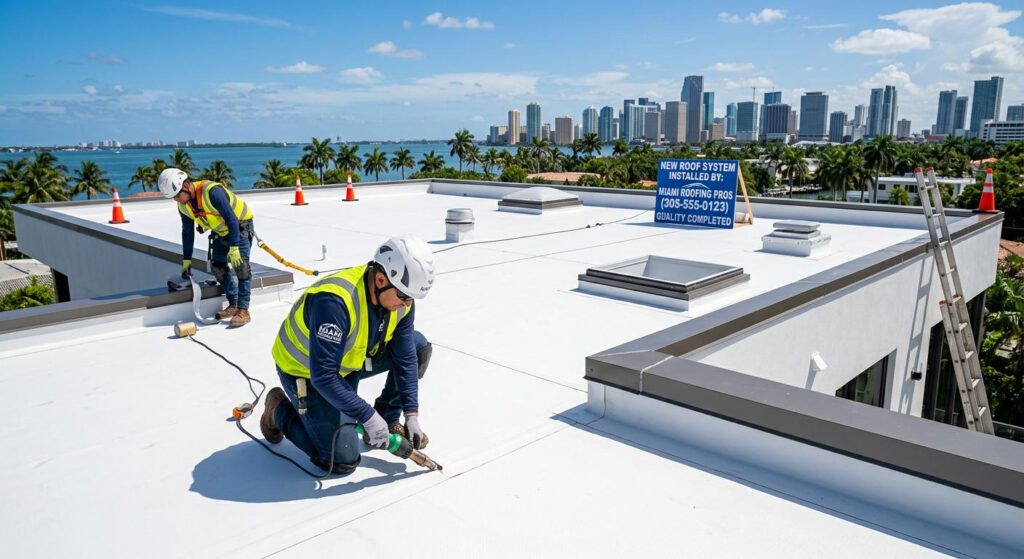
TPO is a single-ply membrane known for:
Best For:
White TPO membranes reflect sunlight, helping reduce cooling strain in South Florida homes.
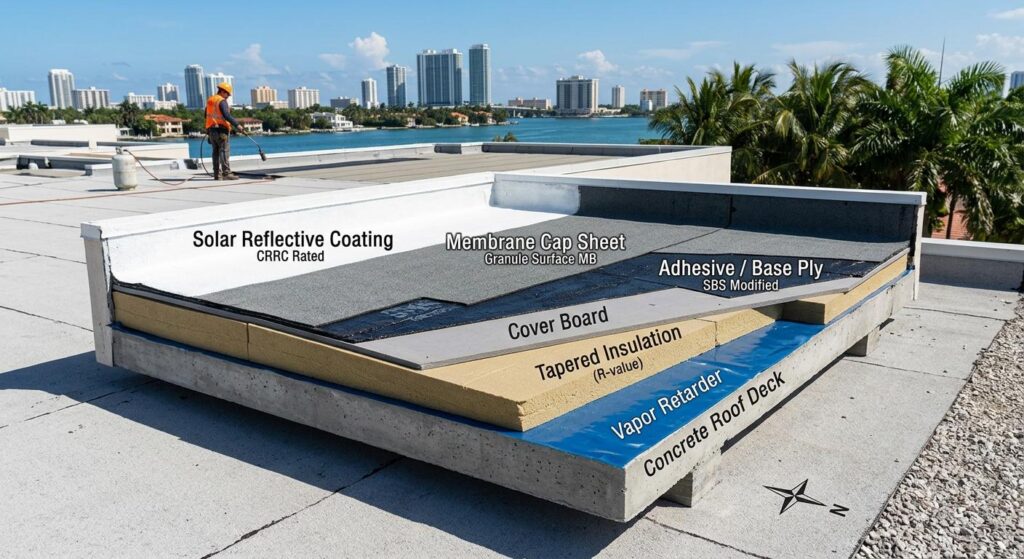
Modified bitumen is a multi-layer asphalt-based system reinforced with polyester or fiberglass.
Modified bitumen performs well during heavy rains and provides strong wind resistance when properly installed.
EPDM is a synthetic rubber membrane.
Metal systems can be used in low-slope designs.
For most Miami properties:
✔ TPO for energy efficiency and commercial durability
✔ Modified bitumen for storm protection and layered strength
The best option depends on:
A professional inspection ensures compliance with Miami-Dade wind codes.
Miami-Dade has some of the strictest roofing codes in the United States.
Flat roofing systems must meet:
Improper installation can void manufacturer warranties and insurance claims.
Click here for more information about roof repair services in Miami.
Flat roof systems require specialized installation.
If you own a property in:
Professional evaluation ensures long-term durability and code compliance.
Read here if you are interested in flat roof replacement in Miami.
We provide roof maintenance across Miami-Dade:
TPO offers superior reflectivity and energy efficiency, while modified bitumen provides layered durability. Both are excellent in Miami when properly installed.
Most flat roofs last 15–25 years depending on material, installation quality, and storm exposure.
Yes, when installed to Miami-Dade wind codes using approved materials and fastening systems.
Reflective systems like TPO can reduce heat absorption and improve energy efficiency.