
Coordinating Other Trades During Roof Work
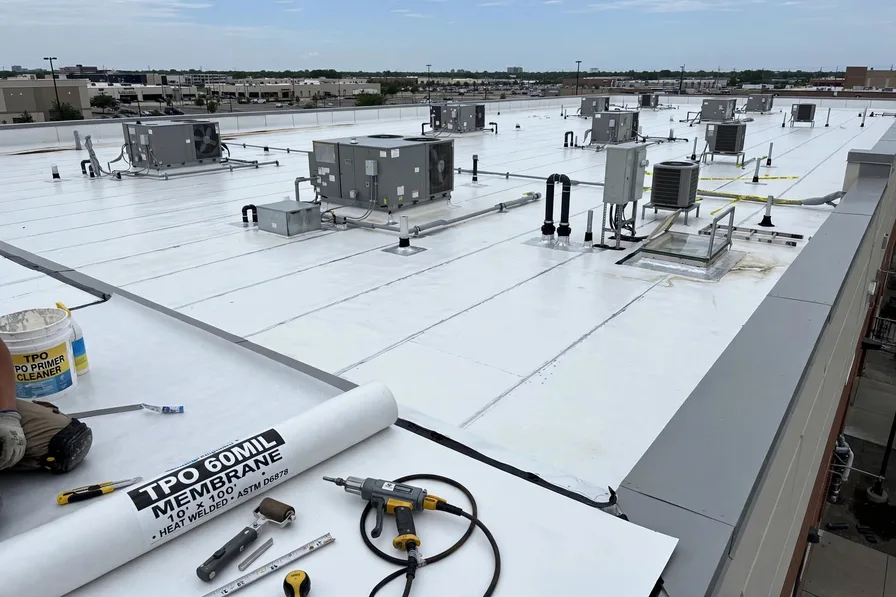
Equipment servicing or a new roof opening can affect an assembly that was otherwise serviceable. Before another provider accesses the roof, identify the intended task and the roofing details involved. Coordination helps avoid a gap where one provider assumes the other will protect, flash or reinstate a component.
Describe the intended work before access
Explain whether the task is routine servicing, equipment replacement or a new penetration. These activities can have different consequences for the roof. Provide available assembly information to the project team so the method and access can be discussed with the appropriate provider.
Do not assume a familiar equipment contractor knows the exact roof product or warranty terms. Similarly, a roofer's involvement does not mean the roofing scope includes mechanical or electrical tasks.
Who is responsible for each interface?
Identify who makes an opening, installs or removes the component, flashes the connection and checks the completed work. If equipment must be lifted, establish who coordinates that task and any shutdown. The work agreement should not leave those interfaces to an informal assumption on site.
Example: replacing an equipment curb may involve both mechanical work and a membrane connection. A provider handling the equipment may not be responsible for the roof detail unless that task is expressly agreed. This is a hypothetical example, not an Orian service commitment or project record.
What protection and access are appropriate?
The route, work area and storage method should suit the installed assembly. Materials placed on a roof or movement around equipment can affect covering and details. Ask the relevant providers to agree on the method rather than selecting a generic protective measure yourself.
For a shared building, establish roof-access authority and resident or tenant arrangements. Keep access records so later symptoms can be compared with the date and location of work.
How does existing coverage affect the decision?
Review the actual offered warranty and any provisions concerning alterations, access or repair. A new opening or incompatible treatment may raise coverage questions. Obtain the applicable requirements from the documents and provider instead of relying on a broad statement that any professional work is permitted.
The coverage guide explains why terms vary. It cannot determine whether a particular task preserves or changes a particular warranty.
What should be checked when the task is finished?
Identify the completed equipment and roofing work and any unresolved handoff. Retain records of the location, date and products or details changed. If a new penetration was made, the roof record should show it rather than preserve only the original installation plan.
Photographs can help when available, but their meaning should be clear. A photo of installed equipment alone does not show that every hidden roof connection was assessed or completed.
What if a leak appears afterward?
Report the timing and location with the work records. A later symptom may relate to the altered area, another detail or an unrelated cause, so assessment is needed before responsibility or scope is assumed. Do not apply a surface product over the area merely to avoid contacting the providers.
For a commercial assembly, read commercial repair and TPO roofing where relevant. Contact Orian with the planned task or changed symptom to discuss the roofing interface as a defined part of the work.