
Commercial roofing in Miami
Orian Roofing & Construction repairs, replaces, and maintains commercial roofs in Miami. Tell us how you use the building. A store, office, or warehouse may need different access and work hours. Explore commercial roof replacement or roof financing options.
For condominium properties, coordinate access, approvals, and work timing with the people responsible for the building. See our guide to coordinating a shared condominium roofing project.
Schedule Your Free Consultation
Why Businesses Choose Orian Roofing for Commercial Projects
We understand the complex demands of commercial structures and deliver high-performance solutions.
Roof Assessment and Planning
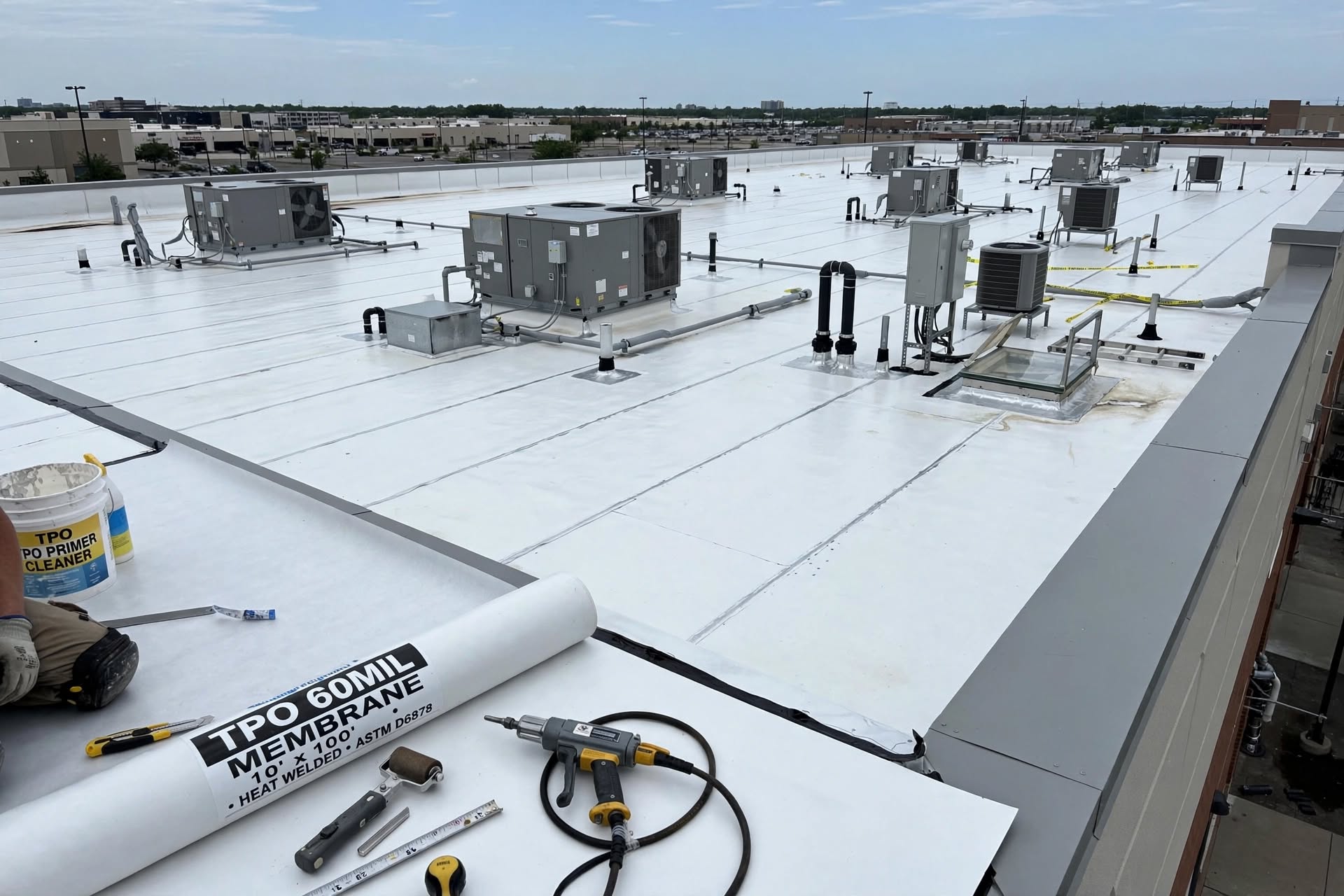
Assess roof condition, drainage, exposure, and project needs before comparing repair, restoration, or replacement options.
Project-Specific Roof Assemblies
Review the proposed assembly and product documentation against applicable project requirements.
Flat & Low-Slope Roof Specialists
TPO, Modified Bitumen, BUR, and commercial-grade coatings.
Occupied-Building Planning
Confirm access, work zones, noise considerations, and cleanup arrangements before work begins.
Repair-First Approach
Compare suitable repairs, restoration, and replacement based on roof condition and the proposed scope. Costs and savings depend on the project.
Project Documentation
Confirm required contractor credentials, insurance documentation, and the agreed scope before approving work.
Commercial Roofing Systems We Install
Compare these roofing and restoration options against the building’s roof conditions and project requirements:
TPO Roofing (Thermoplastic Polyolefin)
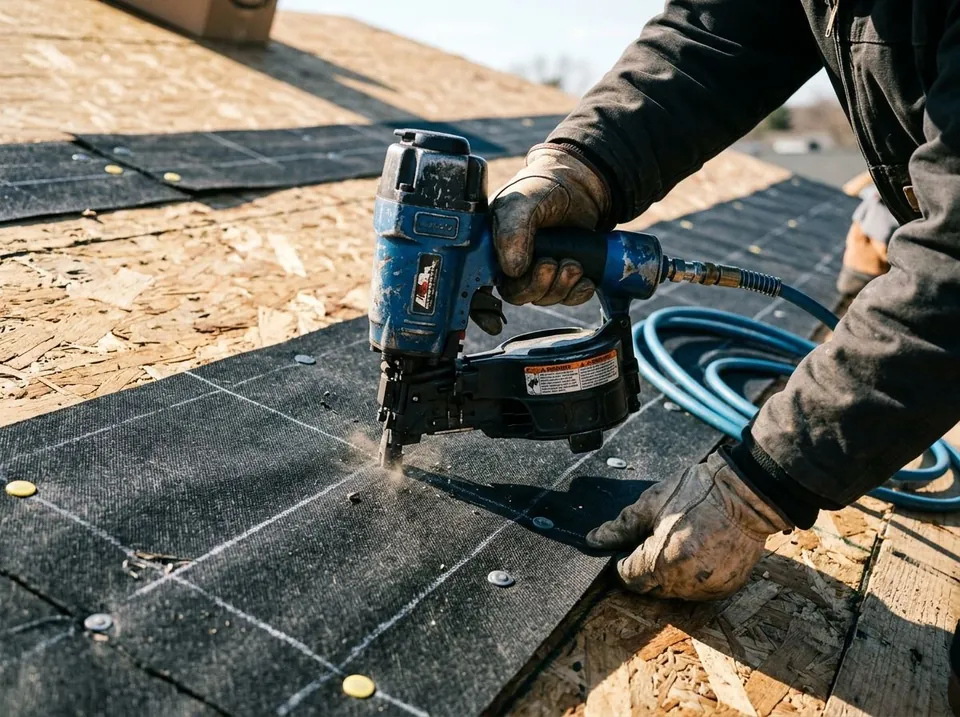
Miami’s most popular energy-efficient commercial flat roof material. Ideal for warehouses, retail centers, industrial properties, and more. Explore flat roofing.
Benefits:
- Reflective options depend on the selected product
- Heat-welded seams with installation quality checks
- Review documented exposure limitations
- Service life depends on condition and maintenance
- Assembly selected for the building
Modified Bitumen Roofing (Mod Bit)
Durable, flexible membrane ideal for smaller commercial buildings. Common for restaurants, small offices, and low-slope properties.
Benefits:
- Protection depends on the complete assembly
- Attachment selected for the substrate
- Review product-specific exposure requirements
- Repair suitability requires assessment
BUR (Built-Up Roofing)
Multi-layered roofing built for heavy-duty commercial protection. Ideal for large commercial buildings and industrial properties.
Benefits:
- Performance depends on design and installation
- Flashing and drainage remain important
- Follow system maintenance requirements
- Plan protection for maintenance access
Commercial Roof Coatings
Compatible coating systems may extend the service life of suitable roofs. Existing damage, moisture, and drainage issues must be assessed before restoration. Read our Silicone Roof Coating page.
Types:
- Silicone
- Acrylic
- Elastomeric
- Polyurethane
Commercial Metal Roofing
Excellent for commercial structures needing long-term durability. Great for warehouses, industrial buildings, and retail spaces.
Benefits:
- Service life depends on product and conditions
- Wind performance depends on the assembly
- Energy performance depends on the building
- Follow product maintenance requirements
Flat vs. Metal vs. Tile for Commercial Buildings
Compare the specific products and complete assemblies proposed for your building. Material names alone do not establish lifespan, price, wind resistance, or maintenance needs.
| System | Lifespan | Upfront Cost | Wind Performance | Maintenance |
|---|---|---|---|---|
| Flat (TPO / Mod-Bit / BUR) | Product, installation, exposure, and maintenance dependent | Project-specific estimate | Depends on tested assembly, deck, attachment, and design requirements | Follow system guidance; inspect membranes, flashing, and drainage |
| Metal (Standing Seam) | Product, installation, exposure, and maintenance dependent | Project-specific estimate | Depends on panel system, attachment, deck, and design requirements | Follow system guidance; assess panels, flashing, and accessible attachment details |
| Tile | Product, underlayment, installation, and maintenance dependent | Project-specific estimate | Depends on the complete tile assembly and project requirements | Follow system guidance; assess tiles, underlayment condition, and flashing |
Roof slope, structural capacity, drainage, existing conditions, access, and architectural requirements guide system selection. Request a project-specific proposal identifying the recommended assembly, included work, exclusions, and maintenance requirements. A warranty period is not a guaranteed service life.
Commercial Roofing Project Requirements
Confirm the requirements that apply to your building and proposed roofing work before approving the project. Review the roof assembly, supporting documentation, and responsibilities with the relevant project professionals.
Product Approvals and Roof Assembly Requirements
The complete roof assembly, attachment details, and relevant product-approval documentation should be reviewed against the project’s applicable requirements. Confirm the proposed materials and assembly rather than relying on an approval label alone.
Permitting & Inspections
Before work begins, confirm applicable permits and inspections, who handles applications and scheduling, and which fees are included. Record these responsibilities and any owner-provided information in the written proposal.
Wind Uplift Calculations
Wind design should address the building, roof zones, exposure, deck, and specified assembly. Confirm the required design documentation and attachment details with the responsible project professionals.
Tenant-Occupied Building Scheduling
For occupied buildings, agree on a project plan that addresses tenants, access, noise, equipment, and cleanup. Scheduling options depend on the property and scope:
- Discuss off-hours or weekend work where practical and permitted
- Agree on phased work zones where suitable for the project
- Coordinate loading, parking, and pedestrian access with property management
- Define work-area boundaries and debris-control arrangements
- Confirm cleanup timing and any temporary access restrictions
Managing a Multi-Tenant Property?
Share your occupancy and access constraints so a practical work plan and any scheduling limitations can be discussed before work begins.
Request a Scheduling ConsultationWarranty Terms
Warranty availability depends on the project scope and selected system. Repairs, maintenance, and new installations may have different coverage. Any applicable manufacturer and workmanship warranties should be identified separately in the written proposal.
Manufacturer Material Warranty
Manufacturer coverage depends on the selected product and written warranty. Duration, exclusions, registration, transferability, and inspection or maintenance requirements should be confirmed before approval.
Workmanship Warranty
Where provided, workmanship coverage addresses the work specified in the written agreement. Confirm its duration, covered items, exclusions, claim procedure, and maintenance requirements before approving the project.
Commercial Roofing Services We Provide
Discuss your building’s condition and roofing needs to confirm the available services and proposed scope.
Commercial Roof Installation
A commercial installation proposal should identify the specified assembly, deck assessment, insulation or drainage work, attachment, flashing, and quality checks. Confirm applicable documentation and inspection responsibilities before work begins. Upgrading an old roof?
Commercial Roof Repair
We repair all types of commercial roof damage: TPO seam splits, punctures, tears, modified bitumen cracks, BUR blistering, leaks around penetrations, drainage issues, ponding water, and flashing damage. See our commercial roof repair service page.
Commercial Roof Leak Detection
Leaks on commercial roofs can travel long distances before appearing inside. We diagnose membrane failures, improper sealing, flashing breakdown, skylight or vent leaks, and HVAC condensation issues. Check our inspections page.
Commercial Roof Replacement
When repairs are no longer cost-effective, we provide full roof replacement using upgraded, modern commercial systems. Check our commercial roof replacement page.
Commercial Roof Maintenance
Maintenance can help identify visible deterioration and support ongoing roof care. Agree on inspection, cleaning, and any repair work based on system condition and manufacturer requirements. Maintenance does not guarantee that future leaks or repairs will be avoided.
Emergency Roofing Services
Storms, heavy rain, or sudden leaks can interrupt business operations. We offer emergency leak control, temporary tarp protection, and storm damage repair. See our emergency roofing page.
Commercial Properties We Serve
Share your building’s roof type, location, and service needs so the available options and assessment scope can be confirmed.
Reviews From Commercial Roofing Clients
"Thank you for the great service and fair price I’ll appreciate it and recommend all if someone look for roof service"
"The replacement the tool in couple days . Efficient and professional job"
"Thank you for your service Ben and your roof company. The new roof looks great"
Commercial Roofing Across Miami-Dade County
Orian Roofing & Construction provides commercial roofing solutions throughout Miami and the surrounding service areas. Our roofing teams are highly familiar with the specific building permitting, zoning, and weather considerations of South Florida.
Commercial Roof Inspections
An inspection assesses accessible membranes, flashing, and drainage and documents visible concerns. Confirm access requirements, report contents, and delivery timing before booking. Thermal scans, sampling, or specialist reporting depend on the agreed scope. Confirm any credential requirements for insurance or building recertification separately. Explore our roof inspection services.
Visible Leak and Moisture Concerns
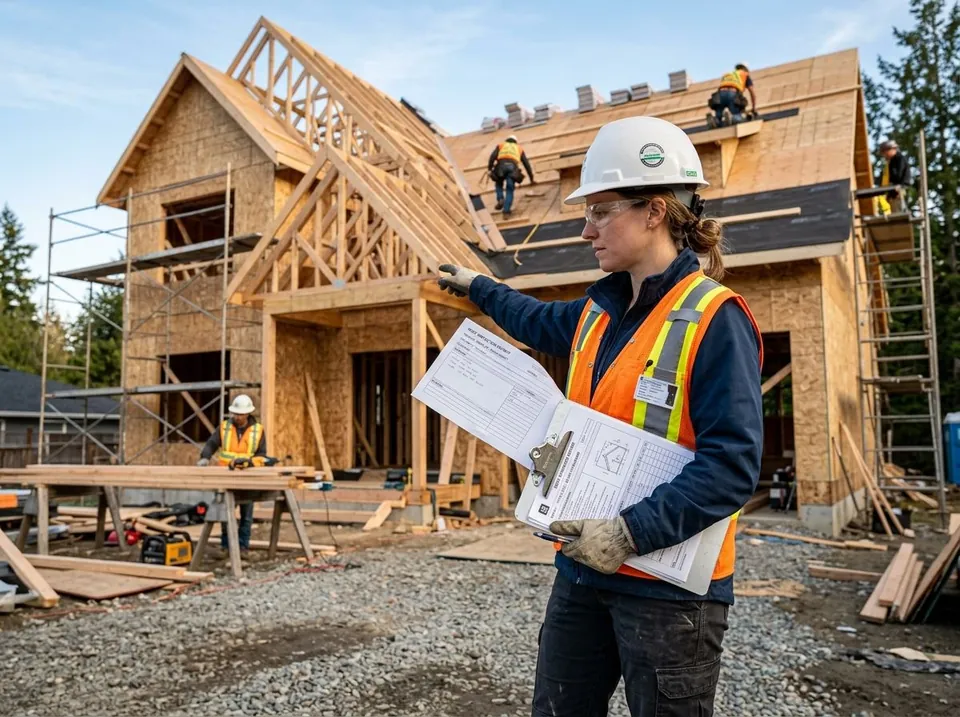
An inspection assesses accessible, visible conditions and may identify signs of deterioration or areas needing further investigation. Concealed defects may not be apparent before interior damage occurs. Additional testing should be agreed upon as part of the inspection scope.
Maintenance and Budget Planning
Documented observations and repair priorities can support maintenance and replacement planning. Any service-life estimate depends on the available evidence and assumptions; an inspection does not guarantee how long a roof will last.
Storm & Insurance Documentation
Dated observations and photographs can document visible roof conditions at the time of inspection. Confirm the insurer’s reporting and credential requirements separately; a report does not establish claim eligibility or coverage.
Membrane & Seam Integrity
We check for splits, blistering, cracking, ridges, and seam separations in single-ply systems (TPO, PVC, EPDM) and multi-ply asphalt systems (Mod-Bit).
Flashing & Penetration Seals
Inspect accessible flashing, pitch pockets, and sealants around rooftop equipment, pipes, and vents. Record inaccessible areas and any conditions that require further investigation.
Thermal Infrared Scans & Core Sampling
Where appropriate and included in the agreed scope, infrared imaging and authorized core sampling can support investigation of moisture and roof assembly conditions.
Visual & Physical Walk-Through
Inspect safely accessible roof areas and document visible wear, defects, and access limitations.
Infrared Moisture Scan
Where included, infrared imaging can identify thermal patterns that may warrant further moisture investigation.
Detailed Digital Report
A report of the agreed inspection findings and recommendations; specialist testing and documentation depend on the agreed scope.
Commercial Flat Roofing
Flat and low-slope roofs need drainage and membrane care. Persistent standing water, open seams, blistering, punctures, loose flashing, or ceiling stains warrant assessment. Confirm the cause and appropriate response rather than diagnosing concealed conditions from visible symptoms alone.
Drainage & Water Runoff Management
An assessment should distinguish obstructed outlets from slope or other drainage defects. Depending on the findings, the proposed work may include drain cleaning or repair, revised drainage details, or a designed tapered-insulation layout.
Repair vs. Full Replacement
Localized punctures or split seams may be repairable. Widespread moisture damage, membrane deterioration, and the condition of the underlying materials determine whether repairs, partial replacement, or a full replacement is appropriate. Age alone does not establish the best option.
Drain & Scupper Clearing
Inspect accessible drains, scuppers, and collection boxes for obstructions and damage. Confirm clearing and any additional repairs within the agreed scope.
Membrane & Seam Audits
Inspect accessible seams and flashing details. Repair methods depend on the membrane, condition, compatibility, and manufacturer requirements; not every system uses heat-welded patches.
Perimeter and Attachment Checks
Inspect accessible edge details, flashing connections, and termination points for visible concerns. A visual check alone does not establish the assembly’s wind-uplift rating or guarantee storm performance.
Frequently Asked Questions About Commercial Roofing
Explore lifespans, repairability, choices, coatings, and inspections in Miami.
Service life varies by roof system, installation, exposure, drainage, and maintenance. An inspection can assess current condition and repair options; a warranty period should not be treated as a guaranteed lifespan.
Localized damage may be repairable. Coating restoration requires a compatible, suitable roof with moisture and substrate conditions assessed first. Widespread damage or wet materials may require replacement of affected areas or the full system.
Selection depends on roof slope, structure, drainage, equipment, exposure, and budget. TPO, modified bitumen, and other membranes are roof-system options. Silicone coatings are liquid-applied restoration systems for eligible existing roofs; they do not have welded seams.
Plan inspections around the roof condition, manufacturer requirements, and exposure. Before and after storm season, and after significant storms, are useful times to discuss with the maintenance team. Follow the schedule in the applicable warranty.
Confirm the report scope before scheduling. Written observations, photographs, and repair priorities can support maintenance planning. Thermal imaging, core sampling, specialist assessments, and delivery timing depend on the agreed scope and site conditions.
An assessment should distinguish blocked outlets from low areas or other drainage defects. Depending on the roof, work may involve clearing or repairing drains, adjusting drainage details, or designing tapered insulation as part of a suitable roofing project.
A recover may be possible after assessing the existing layers, moisture, deck condition, structural capacity, applicable requirements, and the proposed manufacturer’s system. Suitability must be established for the specific building.
Warranty availability depends on the project scope and selected system. Repairs, maintenance, and new installations may have different coverage. Where provided, manufacturer and workmanship coverage are separate; confirm duration, exclusions, registration, maintenance requirements, and transferability in the written documents before approving work.
The proposed roof assembly and attachment details should meet the applicable project requirements. Ask for the relevant product-approval documentation and permitted assembly details for your building.
We work with commercial property managers to plan access, work zones, equipment coordination, and cleanup. Phased or off-hours work may be discussed where practical. Noise, access restrictions, and other disruption should be addressed in the project plan.