
When Reusing Existing Roof Tiles Is Appropriate
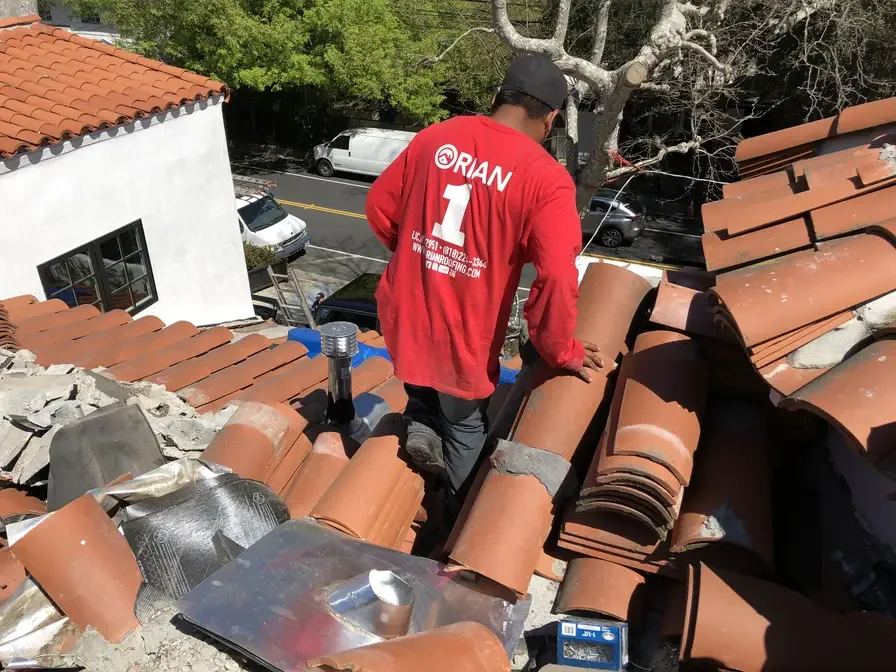
Reusing tiles may be an option when the covering is suitable and the proposed roof assembly can accommodate it. The decision should assess the tile condition and the waterproofing work separately. A familiar appearance does not prove reuse is feasible, and lifting existing tiles is not automatically a smaller project than installing a new covering.
Which parts of the roof are being retained?
Ask whether the proposal concerns a limited area or a broader lift-and-relay scope. It should identify the tiles retained, the waterproofing renewed and the details rebuilt. Retaining the covering does not necessarily retain its original attachment or every component beneath it.
The assessment should also consider the deck and transitions where relevant. A proposal described only as reusing tiles does not explain how the completed assembly will be specified or how concealed conditions affect the work.
How is tile condition evaluated?
Visible damage, fragility and the condition of the profile influence the discussion. Some concerns may not be fully established until lifting begins. The estimate should acknowledge this uncertainty rather than promise that every tile can be recovered intact.
Keep product records or information from spare pieces. Identifying the profile helps determine compatible replacement options and whether the retained tiles fit the proposed approach. Colour alone is not sufficient identification.
What if tiles break during removal?
Discuss expected losses, available replacements and the procedure if actual losses differ from assumptions. The owner should understand whether replacement pieces are included, separately priced or subject to another decision. Avoid accepting a reuse quote with no explanation of this contingency.
Example: serviceable tiles may cover most of an area, while replacements are needed at a damaged transition and for losses during lifting. That creates a material-availability question as well as an underlayment scope. This example is hypothetical and does not establish a breakage rate or an Orian project result.
Can reused and new pieces look different?
Yes, appearance can differ when new material is placed beside weathered pieces. A compatible profile can still have a visible finish difference. Discuss how replacements are distributed and any owner or design-review expectations before treating reuse as preserving an exactly uniform appearance.
For a property with association or municipal appearance requirements, confirm the relevant process. The Coral Gables local page explains why design considerations can be part of the decision; they do not establish that every property follows the same review.
How should reuse be compared with a new covering?
Compare complete scopes: lifting, sorting and storing tiles, renewing waterproofing, rebuilding details and replacing unsuitable pieces. A new-covering proposal may handle those stages differently. The comparison should also consider the condition and compatibility of retained material, not just removal effort.
A durable waterproofing proposal is still needed whichever covering option is chosen. Reuse should not be used to avoid evaluating an underlying defect, and a new covering should not be recommended solely because reuse requires discussion.
What should the decision record contain?
Keep the chosen scope, identified products, assumptions about losses and procedure for additional findings. Record any appearance limitations accepted by the owner. These documents explain the assembly and make future matching enquiries more useful.
Explore tile roofing and replacement planning for related services. Contact Orian with safe photographs, material records and the area needing work so reuse can be evaluated as a real option rather than an automatic promise.