
What Standing Water Can Mean on a Flat Roof
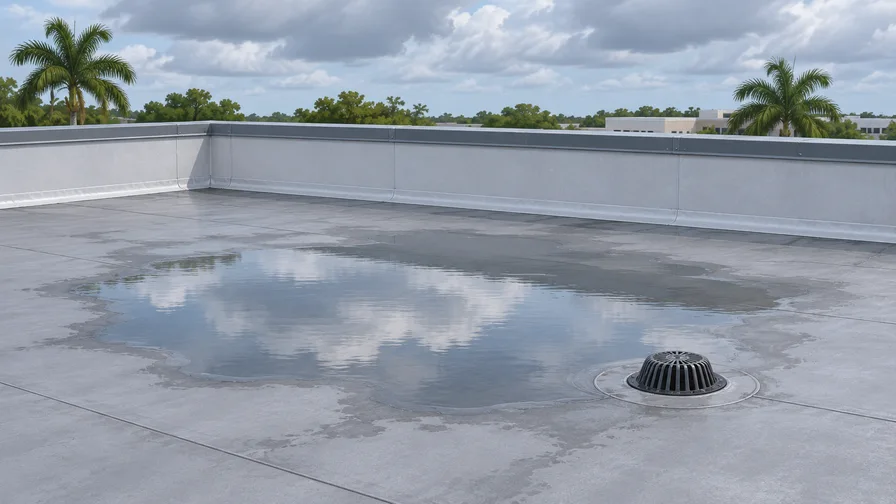
Water remaining on a low-slope roof needs its cause assessed before a treatment is chosen. The problem can involve an outlet restriction, the drainage route or the shape of the assembly. It can also exist alongside a separate membrane defect. Describing all of these as a leaking flat roof hides the different questions each condition raises.
Where does the roof discharge water?
Identify the collection and discharge route from available records or safe observation. A roof may use drains, scuppers or an edge-and-gutter arrangement. The visible puddle is only one point along that route, and changes elsewhere can influence it.
Do not access the roof or reach into an outlet yourself during unsafe conditions. Describe what you can observe safely and let a professional assessment establish the location and condition of the relevant components.
Is an outlet restricted or is the area low?
Debris can impede an outlet, while an area of the roof may be below the intended drainage route. These findings require different work. A cleared outlet does not prove the surrounding shape is suitable, and a proposal for slope changes should not ignore an actual blockage.
Example: water accumulating close to a drain after visible debris collects there is a different investigation from water remaining in a separate area after the outlet has been assessed as clear. This is a hypothetical distinction, not an Orian diagnosis or a conclusion about a particular roof.
Does standing water prove there is a leak?
Not by itself. Water remaining on the surface and water entering the building are related concerns to assess, but neither establishes the other's cause. The membrane and its connected details should be reviewed alongside the drainage pattern.
Record interior leak locations and when they occur. The investigation can then consider whether the symptom relates to the affected roof area, another detail or a connected building component. A surface photograph alone cannot identify every concealed condition.
Can a patch or coating solve the drainage problem?
A compatible patch can address a defined membrane defect. A coating can be a restoration option for a suitable substrate. Neither scope automatically changes the path or discharge of water. The proposal should state which problem is corrected and what drainage concern remains.
Explore flat roofing for assembly questions and silicone coating for restoration limits. Product suitability for an exposure does not prove a drainage design is adequate.
What if the assembly needs a larger change?
Changing slope or drainage components may require additional design and project coordination. The existing layers, equipment and connected details need consideration. Ask how the proposal establishes suitability and what required approvals apply to the actual work.
Avoid a universal promise that one insulation product or relocated drain eliminates every low point. The specified assembly and conditions at the building determine the solution. For a commercial property, discuss equipment and operating constraints before agreeing on a sequence.
What should the assessment and proposal distinguish?
Separate outlet maintenance, membrane repair and any assembly or drainage alteration. Define the work areas and responsibility for components beyond the roof, including downspouts or site discharge where relevant. That distinction makes the proposal understandable and identifies tasks outside the roofing scope.
Commercial roof repair is a useful starting point for an operating building. Send Orian the address, roof information and observations, including interior symptoms and safe photographs. Ask for a scope connected to the assessed cause rather than choosing a surface treatment first.